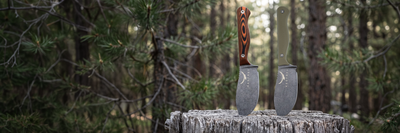
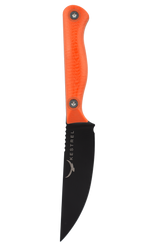


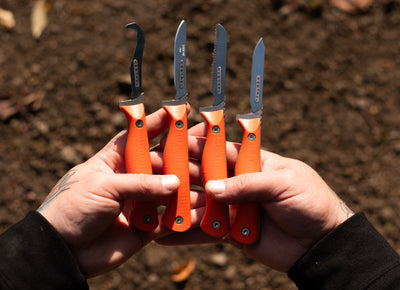



A good hunting knife is built to get dirty. Blood, fat, hide, dirt, and whatever else the hunt throws at it are all part of the job.
But taking care of your knife shouldn’t be complicated.
Whether you’re carrying an Ovis Hunter in MagnaCut, a lightweight Skeleton knife, or one of our replaceable-blade scalpels, a little cleaning goes a long way.
Here’s how we recommend keeping your Kestrel ready for the next hunt.
1. Start With a Quick Clean in the Field
When you’re finished breaking down an animal, take a minute to clean your knife before putting it away.
You don’t need anything fancy.
- Wipe the blade clean. Remove as much blood, fat, and tissue as possible with a clean cloth or paper towel.
- Use clean water when available. A little drinking water can help remove anything left behind.
- Pay attention to the handle. Blood and debris can collect around handle scales, tang edges, and textured surfaces.
- Dry the blade. Give it a good wipe before returning it to the sheath.

If you’re in the middle of a long pack-out and can’t clean everything perfectly, don’t worry. Secure the knife in its sheath and give it a proper cleaning when you get back.
The important thing is not leaving blood, moisture, and debris sitting on your knife for days.
2. Give It a Proper Cleaning at Home
Once you’re back from the hunt, cleaning your knife takes only a few minutes.
Here’s what we recommend:
- Warm water and mild dish soap. This removes the fat, blood, and residue that a dry cloth might miss.
- Use a soft brush. An old toothbrush works well for cleaning textured handles, exposed tangs, and hard-to-reach areas.
- Rinse with clean water. Make sure all the soap and residue are removed.
- Dry everything thoroughly. Use a clean towel and allow any remaining moisture around the handle to evaporate before storing.
- Clean the sheath, too. There’s no sense putting a clean knife back into a sheath full of dirt and dried blood.

Keep your fingers clear of the cutting edge while cleaning. Never run a cloth or your hand along the sharpened edge.
And please, skip the dishwasher. Harsh detergents, heat, and contact with other utensils aren’t doing your knife any favors.
3. Does MagnaCut Need Special Care?
One of the reasons we use CPM MagnaCut in knives like our Ovis Hunter and Mouflon Skinner is its excellent combination of edge retention, toughness, and corrosion resistance.
MagnaCut is particularly impressive when it comes to resisting rust.
Unlike many traditional stainless knife steels, MagnaCut was developed with a microstructure that minimizes chromium carbides, leaving more chromium available to help protect the steel against corrosion.
In testing by metallurgist Dr. Larrin Thomas, who developed MagnaCut, the steel demonstrated exceptional corrosion resistance, even outperforming several well-known stainless knife steels.

So does that mean you can leave your MagnaCut knife covered in blood for a week?
We wouldn’t recommend it.
MagnaCut is highly corrosion-resistant, not completely corrosion-proof. Extended exposure to moisture, salt, and contaminants can still cause problems.
The good news is that maintaining it is simple.
Wash it with mild soap and water, rinse it, and dry it thoroughly.
That’s really all most MagnaCut hunting knives need after a normal day in the field.
You don’t need to coat your blade in oil after every use, and you certainly don’t need expensive cleaning products.
For extended storage, a very light coat of food-grade mineral oil is optional additional protection.
4. Taking Care of AEB-L Blades
Our Skeleton EDC uses AEB-L stainless steel.
AEB-L is known for its toughness, fine grain structure, and ability to take a very sharp edge. It’s also relatively easy to maintain and sharpen.

Like MagnaCut, AEB-L is stainless, but it isn’t immune to corrosion.
The cleaning process is the same: mild soap, clean water, and thorough drying.
If you’re carrying your knife every day, occasionally check for moisture and debris, especially after exposure to sweat, rain, or food.
5. Cleaning G10 Handles and Paracord Wraps
Not every Kestrel has the same handle, and different materials need slightly different attention.
G10 Handles
G10 is an excellent material for hunting knives because it’s strong, dimensionally stable, and doesn’t readily absorb water.
Blood and fat can still collect in the texture, though.
Use warm soapy water and a soft brush to clean the grooves. Rinse thoroughly and dry.
Avoid harsh solvents or abrasive cleaning pads, particularly around coated finishes.
Paracord-Wrapped Handles
Paracord is lightweight, comfortable, and practical, which is why we offer it on our Skeleton models.
However, woven cord can absorb moisture and trap blood or debris.
After a hunt, clean the wrap with mild soapy water and rinse thoroughly.

Allow it to dry completely before storing the knife.
If the wrap is heavily contaminated, remove it for a more thorough cleaning or replace it. Moisture and residue can remain trapped underneath even when the outside feels dry.
And remember, our Kestrel For Life program includes a free paracord rewrap when you send your knife in for sharpening.
6. Cleaning Titanium Scalpel Handles
Our Ovis Scalpel and Mountain Scalpel use titanium handles for their lightweight strength and excellent corrosion resistance.
Titanium is highly resistant to corrosion, so cleaning the handle is straightforward.
The replaceable blades deserve a little more attention.
- Remove the used blade safely. Use a suitable blade-removal tool or appropriate technique, keeping your fingers away from the cutting edge.
- Dispose of used blades properly. Place them in a puncture-resistant sharps container, never loose in your pack or trash.
- Clean the blade slot. Blood and debris can collect where the replacement blade attaches.
- Wash and dry the handle. Mild soap and water are generally all you need.
- Keep replacement blades dry. Store unused blades in their protective packaging.

If your scalpel has a Cerakote finish, avoid abrasive pads, aggressive polishing compounds, and harsh cleaners that could damage the coating.
7. Don’t Forget Your Kydex Sheath
This is one of the easiest maintenance steps to overlook.
Kydex doesn’t absorb water like leather, but dirt, grit, blood, and moisture can still collect inside the sheath.
That debris can scratch your blade or contaminate it the next time you put it away.
Every so often, give your sheath a cleaning.
Use warm water, a little mild soap, and a soft brush if needed.

Rinse it thoroughly and allow it to drain and dry completely.
Make sure no grit remains inside before reinserting your knife.
A clean knife deserves a clean sheath.
8. What If You Notice Rust or Discoloration?
Even corrosion-resistant stainless steels can occasionally develop surface staining or rust, particularly after prolonged exposure to harsh conditions.
If you notice a small spot, don’t immediately reach for sandpaper or steel wool.
Start by washing and drying the blade.
Try gently wiping the affected area with a clean microfiber cloth and a little mild cleaner.
If the spot remains, contact us before using abrasive products or polishing compounds.
Aggressive polishing can change the blade’s original finish, and some discoloration may be surface contamination rather than corrosion of the blade itself.
For Cerakoted knives, avoid metal polishes and abrasives altogether.
If you’re seeing actual pitting or damage to the steel, reach out to us so we can help determine the best next step.
9. How to Store Your Knife Between Hunting Seasons
When hunting season wraps up, a few simple steps will help keep your knife in good condition.

Clean it. Make sure there’s no blood, fat, or other residue remaining.
Dry it. Check the handle, sheath, and any paracord wraps for trapped moisture.
Store it somewhere dry. Avoid damp basements, humid garages, or places with frequent temperature changes.
Keep the sheath clean. For extended storage, we prefer keeping the knife safely protected outside its sheath when practical. If stored in Kydex, make sure both the knife and sheath are completely dry.
Consider a little oil. A thin application of food-grade mineral oil provides additional protection during long storage periods, especially in humid environments.
That’s it.
No complicated maintenance schedule required.
10. Keep Your Edge Ready for the Next Hunt
Cleaning is only part of taking care of your hunting knife.
A sharp knife makes cleaner cuts, requires less force, and gives you better control when working around hide, joints, and delicate areas.
We sharpen our Kestrel knives at approximately 20 degrees per side.
If you’re maintaining the edge yourself, keeping a consistent angle is important. Changing the sharpening angle is possible, but it may require reprofiling the edge.
Our UL Field Sharpener is a convenient option for maintaining your edge in the field, although more extensive sharpening may require a dedicated sharpening system.

And if you’d rather have us handle it, that’s exactly why we created Kestrel For Life.
Every Kestrel knife comes with complimentary lifetime sharpening.
Send your knife back to us, and we’ll take care of the sharpening and cover the return shipping to U.S. addresses.
Need your Skeleton knife rewrapped? We’ll do that free, too.
You can find the details on our Kestrel For Life page.
Built to Be Used. Easy to Maintain.
We’ve been making knives since 2011, and one thing hasn’t changed.
A hunting knife should be something you can depend on in the field without having to baby it.
That’s why we put so much thought into our steels, handle materials, and overall designs.
Our knives are meant to work. They’re going to get bloody, dirty, and wet. That’s part of hunting.
Just take a few minutes to clean them when you’re done.
Built light. Built to hunt. Built in America.
Team Kestrel