



Sheep hunting, the gear we carry, and why the little things matter in the mountains.
There's something about sheep hunting that separates it from almost everything else.
The terrain is unforgiving, the weather can change in a matter of minutes, and getting into sheep country usually means putting in some serious miles. Even when everything goes according to plan, it's hard work, and that's a big part of why people love it.
For most hunters, preparation starts long before the season opens. You're getting in shape, studying maps, figuring out where you'll hunt, and going through your gear trying to decide what you actually need.
Every piece of equipment has to earn its place in your pack, but there's a balance. You can get so caught up in cutting weight that you end up leaving behind something you'll wish you had when it matters.
We recently had the opportunity to hear from Rodrigo at El Rincon Ranch about sheep hunting, the equipment he relies on, and what makes these hunts so special.
What stood out wasn't just his thoughts on knives. It was his perspective on the hunt itself and the importance of being prepared for everything the mountains can throw at you.
The Hunt Is About More Than the Ram

Rodrigo shared something about sheep hunting that we really appreciated.
To me sheep hunting is the truest form of hunting and harvesting the sheep is just icing on the cake. Make sure you enjoy the challenges the hunt brings. As Tavis Molnar from Arctic Red River Outfitters would say, “The beauty of sheep hunting is in the challenges that it presents to you.”
— Rodrigo, El Rincon Ranch
There's a lot of truth to that.
So much goes into a sheep hunt before you ever have an opportunity to take an animal. The early mornings, the climbs, the hours spent glassing, and the days when you put in a tremendous amount of effort without seeing much of anything.
You might spend hours climbing toward a ridge only to discover the sheep have moved. Or you might start the morning with a solid plan and have to completely change it by lunchtime.
You have to be willing to adapt, and sometimes that's what makes the experience so rewarding.
And if you're fortunate enough to harvest a ram, the work is far from over.
Depending on where you're hunting, you could still have miles of difficult country between you and the trailhead. Now you're carrying meat, a cape, and possibly horns on top of everything you brought in.
That's when the decisions you made while packing really start to matter.
Finding the Balance Between Weight and Capability
There's a reason sheep hunters pay so much attention to pack weight.
A few extra ounces might not seem like much when you're standing in your garage, but add enough unnecessary gear together and you'll notice it after a few days in steep country.
That doesn't mean everything has to be the lightest option available.
Sometimes a slightly heavier piece of equipment is worth carrying because it's more comfortable, more durable, or simply works better for you.
Knives are a good example.
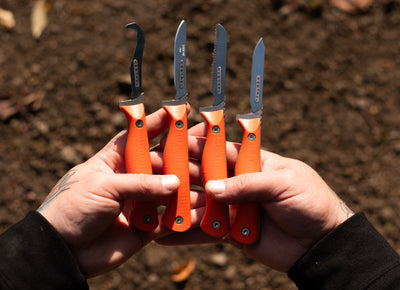
Some hunters carry one small fixed blade that handles nearly everything. Others prefer a replaceable-blade scalpel, while some like having a second knife for more detailed work.
A lot of it comes down to personal preference and the type of hunting you're doing.
When you're breaking down an animal in the field, you want something that cuts efficiently, feels secure in your hand, and gives you enough control to work without damaging meat or the cape.
And you certainly don't need a big knife to accomplish that. In fact, a larger blade can sometimes make certain jobs more difficult, especially when you're working in tight areas.
What Really Matters in a Hunting Knife?
One thing we hear from hunters all the time is that they want a knife that stays sharp.
That makes sense. Nobody wants to stop halfway through processing an animal because their knife isn't cutting anymore.
But there's more to a good hunting knife than how long the edge lasts.
Blade geometry plays a big role in how a knife performs. The thickness of the blade, the shape of the cutting edge, and how easily it moves through material all affect how it cuts.
A thin blade with good geometry can make skinning and detailed work easier because you're not forcing as much steel through the material.
The handle is just as important.
When your hands are cold, wet, or covered in blood, you need to be able to maintain control of the knife. Something that feels comfortable in your garage might feel very different after an hour of work in freezing temperatures.
Durability matters too. Sheep hunts are demanding on equipment, and your knife is going to get wet, dirty, and occasionally knocked around.
Rodrigo made a similar point when we asked what he looks for in a hunting knife.
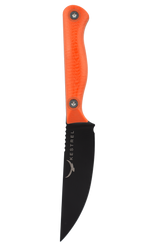
What I look for the most in the knife is not only a sharp blade but a strong one that won't break even after putting it through the paces. The Ovis Hunter besides having these qualities has a very sturdy feel to it, the size of the blade and the grip give you confidence when it's time to break down even the largest big game animals.
— Rodrigo, El Rincon Ranch
We appreciate that feedback because it speaks to something we've always focused on at Kestrel.
We want our knives to be lightweight, but not at the expense of being useful. A knife still needs to do its job when the hunt is over and the real work begins.
One Knife or Two?
This is something hunters have different opinions about, and both approaches have their advantages.
A single, well-designed fixed blade can handle a surprising amount of work. For someone trying to keep their pack simple, that might be all they need.
But there are also advantages to carrying a second, smaller knife.
You might use your primary knife for field dressing, skinning, and breaking down an animal, then switch to something smaller when it's time to work on the cape.
That's particularly useful when you're preparing an animal for a shoulder mount.
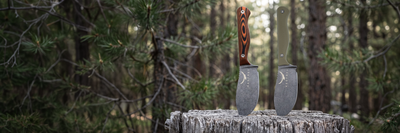
At Kestrel, one combination we like is the Ovis Skeleton 2.0 and Mountain Caper 2.0.
The Ovis Skeleton is a lightweight fixed blade with a paracord-wrapped handle. It has enough cutting edge for general field processing without carrying a lot of unnecessary material.
The Mountain Caper is a much smaller knife designed for controlled, detailed cuts.
Together, the knives weigh just 53.5 grams.

What's useful about this combination isn't necessarily the weight. It's having two different blade shapes that serve different purposes.
You could accomplish the same jobs with one knife if you're comfortable doing so. Carrying a second knife simply gives you another option, and for some hunters, that's worth the small amount of extra weight.
There's Also a Place for Replaceable Blades
Replaceable-blade scalpels have become popular with backcountry hunters for good reason.
They're light, compact, and you can put on a fresh blade when your current one starts losing its edge.
That convenience can be especially appealing on longer trips. Instead of carrying sharpening equipment, you can bring a few spare blades that take up very little room in your pack.
Our Mountain Scalpel 2.0, for example, has a titanium handle that weighs just 12 grams.

But replaceable blades have their trade-offs.
Scalpel blades are thin, and they're not intended for prying, twisting, or other heavy work. You need to be mindful of how you're using them.
Changing blades in the field also requires some care, particularly when your hands are cold or you're working in poor light.
Some hunters swear by replaceable blades, while others prefer a traditional fixed blade they can sharpen and use for years. Both have their advantages, and a lot of it comes down to personal preference and the type of hunting you're doing.
Taking Your Time With the Cape
If you're fortunate enough to harvest a mature ram, there's a good chance you'll want to preserve the cape for a mount.
This is one area where patience really matters.
A lot of the larger cuts are fairly straightforward, but working around the eyes, ears, lips, and nose requires much more attention.
These are delicate areas, and mistakes can be difficult for a taxidermist to repair.
A smaller blade can make that work easier because you have more control over where the cutting edge is going, but no knife makes up for rushing.
One thing we'd strongly recommend is talking to your taxidermist before the hunt.
Ask how they prefer the cape to be prepared, how much material they want left attached, and whether there are any particular areas they want you to leave alone.
That conversation can save you a lot of trouble later.

It's also important to know the meat salvage and horn regulations wherever you're hunting. Those rules can vary depending on the location and species.
Don't Overlook Meat Care
Something else worth remembering is that the job doesn't end when the animal is broken down.
In remote country, keeping meat clean and getting it cooled can be just as challenging as the actual field dressing.
You might be dealing with warm afternoon temperatures, limited shade, insects, or a long pack-out.
Having clean game bags, keeping meat away from dirt and debris, and allowing heat to escape are all important.
In warmer conditions, getting the meat cooled as quickly as possible needs to be a priority. Shade and airflow can help, but they aren't substitutes for proper cooling.
And while it's tempting to focus on saving every ounce, game bags and the equipment you need to care for the meat aren't things we'd recommend leaving behind.
You put too much effort into the hunt to lose meat because you weren't prepared.
The Most Important Piece of Gear Might Not Be Your Knife
We spend a lot of time talking about knives, packs, optics, and other hunting equipment.
But when we asked Rodrigo for his biggest piece of advice, his answer was much simpler.
The biggest tip I can give you is, be sure that your boots fit properly. To me it is the single most important part of your gear. It can make or break your hunt.
— Rodrigo, El Rincon Ranch
That's probably some of the most practical advice in this entire article.
You can have the best knife, the lightest pack, and excellent optics, but none of that matters much if your feet are torn up after the first day.
Sheep country is hard on your body, and your feet take a beating.
Good boots need to fit your feet, provide the support you need, and work for the terrain you're hunting. Just because a particular boot works for someone else doesn't mean it'll work for you.
It's worth spending time finding the right pair and getting plenty of miles on them before the hunt.
The same goes for your pack.
A pack that carries comfortably with 30 pounds might feel completely different when you're hauling meat and equipment out of the mountains.
Getting familiar with your gear before the season is one of the best things you can do.
A Few Things We'd Rather Not Leave Behind
When you're trying to cut pack weight, it's easy to focus on the bigger items, but some of the smaller things can make a big difference when you need them.
A few items worth considering:
- Good game bags: Essential for keeping meat clean and protected during the pack-out.
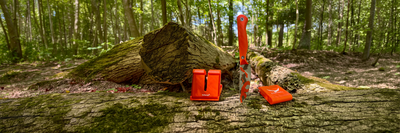
- Spare blades or a small sharpener: Depending on the knife you carry, having a way to maintain a sharp edge is worth the small amount of weight.
- Lightweight gloves: Useful when processing an animal, especially when conditions are cold.
- Cord: One of those simple pieces of equipment that can come in handy for all kinds of tasks.
- A reliable headlamp: Breaking down an animal can take longer than expected, and you don't always get to choose when the work begins.
None of these things are particularly exciting, but they're the kinds of items you'll appreciate having when you're several miles from camp and the sun is going down.
The goal isn't to carry the least amount of gear possible. It's to carry what you actually need.
Taking Care of Your Equipment
Once you're back from the hunt, take a few minutes to clean and inspect your equipment.
Wash and dry your knives, check the edges, and make sure your sheaths and handles are in good shape. Even corrosion-resistant steels need basic care, and it's always better to find a problem at home than halfway through your next hunt.
If you're carrying a fixed blade, touch up the edge before putting it away so it's ready for the next trip. Replaceable blades should be removed and disposed of safely when they're worn or damaged.
A little maintenance goes a long way.
The Gear Matters, but the Experience Matters More
We spend a lot of time thinking about knives, blade geometry, steel, and how to make our equipment better. That's what we do at Kestrel, and it's something we genuinely enjoy.
But talking with hunters like Rodrigo is a good reminder that the gear is only a small part of what makes these hunts special.
You can spend months preparing, researching equipment, and getting yourself in shape, but once you're in the mountains, things rarely go exactly as planned.
And that's part of the experience.
Rodrigo said it well when he talked about enjoying the challenges that come with sheep hunting. The ram is something you'll remember, but so are the climbs, the weather, the long days, and the people you share them with.
At the end of the day, your equipment should make the hunt easier, not become the focus of it.
Pack what you need, leave behind what you don't, and enjoy the time you get to spend out there.
Good luck this season.
Team Kestrel